AI Music Accepted Into Music Industry (well almost)

Elizabeth Matthews CEO ASCAP - Mike O'Neill, CEO BMI - Jennifer Brown CEO SOCAN
ASCAP, BMI AND SOCAN WILL NOW ACCEPT REGISTRATIONS OF ‘PARTIALLY’ AI-GENERATED MUSICAL WORKS
OCTOBER 28, 2025
BY MURRAY STASSEN
Elizabeth Matthews, CEO, ASCAP, Mike O’Neill, President & CEO, BMI, and Jennifer Brown, CEO, SOCAN US PROs ASCAP and BMI, and Canada’s SOCAN, jointly announced today (October 28, 2025) what they call an “alignment” of their AI registration policies. The three major North American PROs say that they will now accept registrations of “partially” AI-generated musical works These works can now be registered directly with the individual societies. All three PROs’ registration policies define a partially AI-generated musical work as one that “combines elements of AI-generated musical content with elements of human authorship”.
According to the three PROs, these works will now be included as part of the full repertoires licensed by each society. However, musical compositions that are “entirely created” using AI tools are not eligiblefor registration with any of the individual societies. In a joint statement issued today, ASCAP, BMI, and SOCAN said that their policy alignment “reflects the fact that songwriters and composers increasingly incorporate a variety of AI tools into their creative process and workflow”. The statement continued: “While an increasing number of AI tools are training their models in an ethically responsible manner that respects the rights of human creators, the three PROs emphasized their firm position that AI technology companies ingesting and training models on copyrighted musical works without permission from, compensation for, or credit to creators is not fair use, but theft.” The policy update from the three PROs arrives 10 months after the United States Copyright Office (USCO) released a report outlining its approach to granting copyrights to content created using generative AI. The USCO’s verdict was that a work created solely through AI is not copyrightable, but a work that combines human creativity with AI can be copyrighted, so long as there is a “sufficient” amount of human expression in that work.
Elsewhere in their statement published today, ASCAP, BMI and SOCAN stressed that they have “advocated for enforcement of strong copyright laws and staunchly defended the rights of music creators in ongoing debates over AI policy across the US and Canada”. They added that “all three PROs have endorsed meaningful AI legislation, supported lawsuits filed on behalf of music creators against the illegal use of their work by AI companies around the globe and weighed in on major AI policy initiatives and studies, including those launched by the U.S. Copyright Office, The White House and the Government of Canada, among others”.
“WE ARE CLARIFYING OUR REGISTRATION POLICY TO NOW WELCOME PARTIALLY AI-GENERATED MUSICAL WORKS BECAUSE WE BELIEVE AI CAN BE A POWERFUL TOOL FOR OUR MEMBERS, AS LONG AS THE LAW PUTS HUMANS FIRST AND TECHNOLOGY COMPANIES PLAY FAIR AND RESPECT THE RIGHTS OF CREATORS.”
ELIZABETH MATTHEWS, ASCAP Elizabeth Matthews, CEO, ASCAP, said: “Songwriters and composers have always experimented with innovative tools as part of their creative process, and AI is no exception. “We are clarifying our registration policy to now welcome partially AI-generated musical works because we believe AI can be a powerful tool for our members, as long as the law puts humans first and technology companies play fair and respect the rights of creators.”
“ALL MUSIC CREATORS WILL BENEFIT FROM THIS ALIGNED APPROACH TO THE REGISTRATION OF PARTIAL AI-WORKS THAT APPROPRIATELY VALUES CREATORS’ CONTRIBUTIONS AND ENSURES THEY ARE PAID PROPERLY.” MIKE O’NEILL, BMI Mike O’Neill, President & CEO, BMI, added: “This is an important first step in protecting human creativity as AI technologies evolve, while supporting the songwriters and composers who choose to use AI as a tool to enhance their creative process.
“ALL MUSIC CREATORS WILL BENEFIT FROM THIS ALIGNED APPROACH TO THE REGISTRATION OF PARTIAL AI-WORKS THAT APPROPRIATELY VALUES CREATORS’ CONTRIBUTIONS AND ENSURES THEY ARE PAID PROPERLY.”“THE FUTURE OF MUSIC CAN EMBRACE AI AND STILL REMAIN DEEPLY HUMAN.” JENNIFER BROWN, SOCAN Jennifer Brown, CEO, SOCAN, said: “This alignment creates a legal and ethical path forward for AI in music. It recognizes that music creators are embracing new tools, while reinforcing our commitment to what matters most: respect for their work and the protection of human creativity. “The future of music can embrace AI and still remain deeply human.”
SUNO SUED AGAIN, AS DANISH CMO KODA ACCUSES COMPANY OF STEALING ITS MEMBERS’ MUSIC TO TRAIN AI MODEL
NOVEMBER 4, 2025
BY MANDY DALUGDUG

credit: matejknezevic / Shutterstock.com
Danish singer Karen Marie Aagaard Ørsted Andersen sings as MØ on a stage with her band at the Aerodrome festival in Prague, Czech Republic
Suno is facing a fresh copyright lawsuit. This time, Danish music rights organization Koda is suing the US-based AI music generator, claiming the company trained its AI model on copyrighted music without permission or payment.
Koda, which has over 52,000 members, comprising composers, songwriters, and music publishers, is accusing Suno of what it calls “the biggest theft in music history”.
The “landmark” case, brought before Copenhagen City Court today (November 4), marks the first time a Danish rights organization has sued an AI music service.
MBW understands that Koda is seeking a court declaration that Suno illegally used its members’ repertoire to train AI models and made those works available to the public through its service.
Koda presented evidence showing similarities between AI-generated tracks and original works by Danish artists including Aqua, MØ, Christopher, and more.
The organization also claims Suno obtained audio files through stream-ripping from YouTube and scraped song lyrics without authorization.
The lawsuit follows similar legal action taken against Suno by German collection society and licensing body GEMA earlier this year.
The platform is also currently facing a major copyright infringement lawsuit in the US brought by labels owned by Sony Music, Universal Music Group, and Warner Music Group. Suno is also facing copyright suits from indie artists.
AI generator Udio was also sued by the majors last year, but just last week, Universal Music Group settled its lawsuit with Udio and struck a deal with the company for a licensed AI music platform, set to launch in 2026.
In a press release on Tuesday (November 4), Koda CEO Gorm Arildsen said: “We are excited about what responsible AI can do for music.”
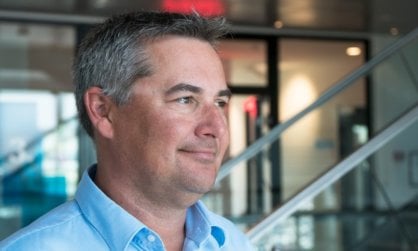
“INNOVATION CAN’T BE BUILT ON STOLEN GOODS. SUNO HAS TAKEN OUR MEMBERS’ CREATIVE WORK AND FED IT INTO THEIR MACHINES WITHOUT CONSENT, TRANSPARENCY OR REMUNERATION.”
GORM ARILDSEN, KODA
He added: “But innovation can’t be built on stolen goods. Suno has taken our members’ creative work and fed it into their machines without consent, transparency or remuneration. That is theft – and it threatens the future of music.”
Suno operates a service that generates music from text prompts.
Bloomberg reported two weeks ago that Suno is generating more than $100 million in annual revenue. The company was valued at $500 million in its most recent funding round and is seeking new investment at a projected $2 billion valuation.
The Koda lawsuit alleges Suno violated Danish copyright law by reproducing protected works and making them available to the public without authorization. Suno also runs a streaming service featuring AI-generated tracks in playlists and searchable libraries.
“We find it unacceptable that it requires legal action to make Suno and similar AI services pay for the music they use to build a service which they profit from,” added Koda’s Gorm Arildsen.
“If the industry wants to foster the future of truly talented artists creating new music, we must protect them. These are the actors most vulnerable to being trampled by big tech. We at Koda refuse to let algorithms shape our cultural history.”
“WE FIND IT UNACCEPTABLE THAT IT REQUIRES LEGAL ACTION TO MAKE SUNO AND SIMILAR AI SERVICES PAY FOR THE MUSIC THEY USE TO BUILD A SERVICE WHICH THEY PROFIT FROM.”
GORM ARILDSEN, KODA
A press release issued by Koda today cites a report by HBS Economics commissioned by Koda and IFPI Denmark, which estimates that AI-generated music could reduce Danish music industry revenue by 6.9 billion kroner ($680 million) from 2025 to 2030 without policy intervention.
The analysis predicts the industry will lose up to 28% of annual revenue by 2030.
Koda is calling for “a clear, industry-wide standard demanding consent, transparency and remuneration from tech companies using human created protected music for training or generating music”. It also urges “the entire sector to rally behind it”.
The org added that “recent licensing progress between industry actors, prove that lawful agreements are in fact possible. Koda’s lawsuit against Suno asks the court – and the industry – to choose a future where AI grows the pie without hollowing out the roots.”
In September, French streaming service Deezer reported that fully AI-generated music now constitutes 28% of all tracks uploaded to its platform daily. Deezer said it now receives over 30,000 fully AI-generated tracks daily, marking a sharp increase from the 20,000 figure it reported in April and the 10,000 it disclosed in January when it first launched its proprietary AI detection tool.
Last year, just two months after being sued by the major record companies, Suno and Udio (which has since settled with UMG), pretty much admitted that they used copyrighted recordings from the recording companies that sued them.
Suno explained that its “training data includes essentially all music files of reasonable quality that are accessible on the open Internet, abiding by paywalls, password protections, and the like, combined with similarly available text descriptions.”